
Oil-free vacuum pumps have become increasingly popular in recent years. When you’re shopping for a vacuum pump, there’s one question that keeps coming up: oil-free or oil-sealed — what’s the real difference, and is it worth making the switch?
If your application involves precision instruments, clean production environments, or high equipment reliability requirements, the advantages of oil-free vacuum pumps aren’t just numbers on a spec sheet. They’re tangible factors that directly impact your production results and long-term operating costs.
Geowell has been focused on oil-free scroll vacuum pump R&D and manufacturing since 2002 — over twenty years now. Our customers span semiconductor, biopharmaceutical, analytical instruments, and research institutions worldwide. This article draws on real-world experience accumulated over those years to break down the 5 key benefits of oil-free vacuum pumps, one by one.
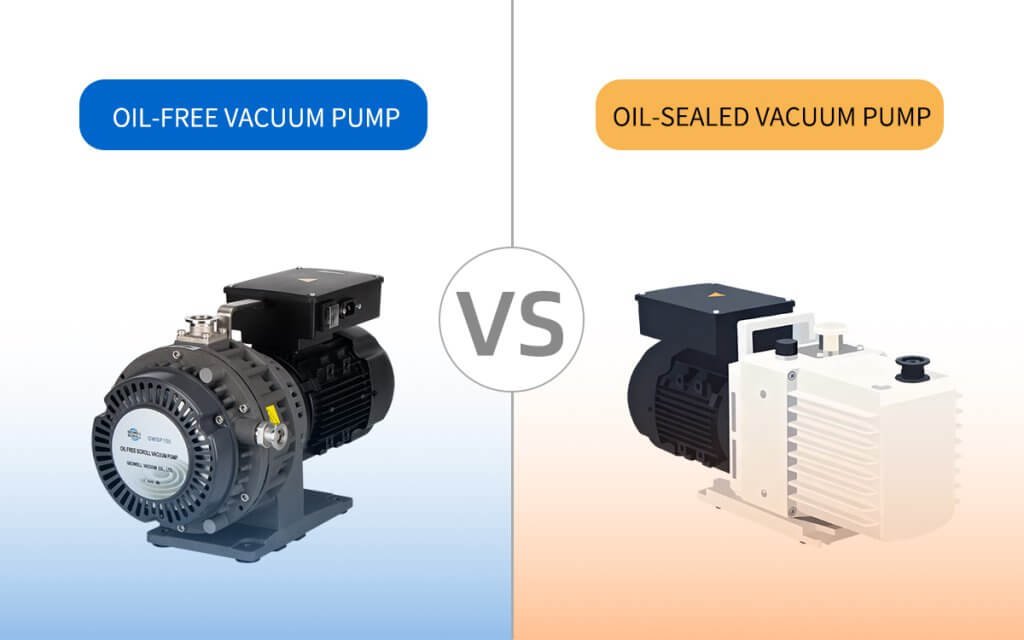
Oil-Free vs. Oil-Sealed Pumps: The Difference Is in the Structure
Traditional oil-sealed vacuum pumps rely on lubricating oil for sealing and cooling, which means the pump chamber always has oil involved in the operation. This inevitably leads to oil vapor entering the vacuum system when gas passes through the chamber — even with oil mist filters installed, you’re just reducing it, not eliminating it.
Oil-free vacuum pumps sidestep this problem entirely through their design. Take oil-free scroll vacuum pumps, for example. They rely on the geometric coordination between the orbiting scroll and the fixed scroll to pump gas. The entire gas flow path doesn’t contact any lubricating medium, so oil contamination simply doesn’t exist at the source.
This structural difference is where all the advantages start. Cleanliness, maintenance requirements, operational stability — they all trace back to this fundamental design choice.
Five Core Benefits of Oil-Free Vacuum Pump
Benefit 1: Clean Gas Flow — Zero Oil Contamination by Design
Core Value: No contamination from the structure itself, not dependent on filters to fix the problem.
This is the most fundamental value of oil-free vacuum pumps, and often the direct reason users decide to switch. Precision analytical instruments like mass spectrometers, gas chromatographs, and electron microscopes are extremely sensitive to gas purity entering the vacuum system. Even trace oil mist residue can interfere with detection signals, affect data accuracy, and in serious cases require shutting down to clean the entire vacuum system.
The situation in semiconductor wafer manufacturing is even more critical. Hydrocarbon contamination during chip processing directly impacts film quality and device yield. There’s no acceptable threshold for oil contamination — it’s either zero or not zero.
Biopharmaceutical sterile production has equally strict gas purity requirements as a compliance mandate. Oil contamination directly equals non-compliance.
Oil-free vacuum pumps don’t rely on filtration to ‘remedy’ contamination — they don’t produce contamination in the first place. For cleanliness-sensitive applications, this isn’t an optimization; it’s a requirement.
Benefit 2: Simpler Maintenance, Lower Long-Term Costs Than You’d Think
Core Value: Longer consumable replacement cycles, no oil handling, significantly reduced maintenance labor.
The maintenance checklist for oil-sealed vacuum pumps typically includes: regular oil changes, cleaning oil mist filters, checking oil levels, and dealing with issues from oil deterioration or oil line blockages. These tasks aren’t complicated, but they require consistent time and labor investment. If maintenance is neglected, performance degrades at best, pump damage occurs at worst, plus you have additional waste oil disposal costs to handle.
Daily maintenance for oil-free scroll vacuum pumps mainly focuses on periodic inspection of sealing strips, O-rings, and a few other consumable components — no oil handling involved. Taking Geowell’s GWSP series as an example, under normal operating conditions, the recommended replacement cycle for major consumables is over 16,000 hours, which translates to about two years.
When you factor in maintenance labor, consumable procurement, and unexpected downtime costs, the total cost of ownership for oil-free pumps over the long term typically isn’t higher than oil-sealed pumps — in some scenarios, it’s actually lower. This is something many users only realize after making the switch.
Benefit 3: Smooth Operation — Lower Noise and Vibration
Core Value: No reciprocating impact, no direct metal friction, noise ≤50 dB(A).
Oil-free scroll vacuum pumps work by having the orbiting scroll perform planar orbital motion around the fixed scroll. Intake, compression, and exhaust happen continuously without reciprocating impact motion. The orbiting and fixed scrolls don’t contact each other during operation, so there’s no direct metal friction. The direct result of this design is low operating noise, minimal vibration, and smooth startup and shutdown.
Geowell’s GWSPB series operates at under 50 dB(A), equivalent to typical indoor background noise levels — basically non-intrusive in a laboratory setting. Low vibration also means less impact on surrounding equipment, which is particularly important when used near precision measurement devices.
Stable operation brings another benefit — lower probability of sudden mechanical failures, which means better equipment availability. For scenarios requiring high production continuity, this is a substantial advantage.
Benefit 4: No Warm-Up Required — Ready When You Are
Core Value: Power on and immediately reach working state, especially useful for frequent on/off scenarios.
Some traditional pump types need a certain warm-up time after startup before reaching stable working conditions. This can be a practical issue in laboratory environments, especially when frequent on/off cycles are needed or production timing is tight.
Oil-free scroll vacuum pumps can enter working state immediately after power-on, with no dedicated warm-up waiting period. For equipment that needs to start and stop multiple times a day, this feature accumulates into considerable time savings. For automated production lines requiring quick response, this is also a practical advantage that can’t be ignored.
Benefit 5: Natural Fit for High-End and Compliance Scenarios
Core Value: Meets GMP, semiconductor cleanroom, and other industry standards without additional modifications.
As industry requirements for clean production and environmental compliance continue to rise, more and more application scenarios now explicitly require oil-free vacuum equipment at the standard or regulation level. Biopharmaceutical GMP production standards, semiconductor process cleanliness requirements, certain food processing hygiene standards — trying to meet these requirements with oil-sealed pumps through retrofitting or filtration is itself a compliance risk exposure.
Oil-free vacuum pumps naturally meet these requirements without needing to consider compliance risks during selection. At the same time, zero waste oil generation also eliminates the environmental compliance burden of waste oil disposal. For companies advancing green factory certification or ESG goals, this is a tangible plus.
Five Major Industry Scenarios Where Oil-Free Vacuum Pumps Excel
Oil-free vacuum pumps aren’t suitable for every scenario, but in the following fields, their advantages are most evident.
Research and Analytical Testing
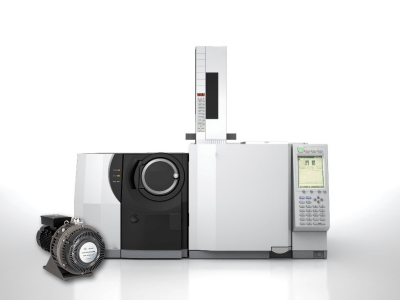
Mass spectrometers, gas chromatographs, LC-MS systems, electron microscopes, freeze dryers — these precision instruments almost all require clean vacuum environments. Oil-free vacuum pumps have become the mainstream solution for these instrument types, and many instrument manufacturers directly recommend oil-free backing pumps in their product specifications. Even trace oil contamination can affect detection accuracy or contaminate samples, with often irreversible consequences.
Semiconductor and Electronics Manufacturing
Wafer fabrication, thin film deposition, photoresist processing… these processes have no room for compromise on vacuum environment cleanliness. Oil-free scroll vacuum pumps are standard equipment in these scenarios, not an optional feature. Hydrocarbon contamination directly impacts yield — this isn’t about comparing performance parameters; it’s about the basic threshold for process viability.
Biopharmaceutical and Pharmaceutical
Sterile drug production, freeze-drying processes, vacuum treatment during fermentation — all have strict gas purity requirements while needing to meet GMP-related regulations. The clean characteristics of oil-free vacuum pumps here aren’t just performance advantages; they’re compliance requirements. For these scenarios, choosing oil-sealed pumps means accepting additional compliance risk.
Laboratory and Research Institutions
Glove boxes, vacuum ovens, rotary evaporators, molecular distillation equipment… there are plenty of places where vacuum pumps are used in laboratories, all with requirements for noise, cleanliness, and operational convenience. Oil-free scroll vacuum pumps are currently the mainstream choice for laboratory scenarios. The low noise and low vibration characteristics are especially important for precision measurement laboratories.
Industrial Precision Manufacturing
Laser tube vacuum coating, molecular pump backing, load lock evacuation, vacuum heat treatment — these industrial scenarios also have clear requirements for vacuum system cleanliness and stability. Application of oil-free vacuum pumps in these scenarios continues to expand.
Geowell Oil-Free Scroll Vacuum Pumps: Twenty Years of Focus
Geowell was founded in 2002, and from the beginning has been focused on one direction: oil-free scroll vacuum pumps. Over twenty years now. This focus is reflected in product iteration — accumulating a large amount of real usage data, failure mode analysis, and technical improvement records over these two decades, not parameters derived from product manuals.
Currently, Geowell’s oil-free scroll vacuum pump product line ranges from the GWSP series to the GWSPB series, covering different needs from small laboratory applications to medium-scale industrial applications. Ultimate vacuum can reach as low as 0.7 Pa, all series equipped with gas ballast valves to adapt to water vapor-containing conditions, inlet and outlet ports use standard KF flanges, directly compatible with most vacuum systems on the market.
- Certified with CE, RoHS, EAC and other international standards
- Cumulative service to over 100,000 users across more than 40 countries and regions worldwide
- Numerous long-term stable operation cases in analytical instruments, semiconductor equipment, medical devices, research institutions, and other fields
4 Parameters to Clarify Before Purchasing an Oil-Free Vacuum Pump
Ultimate Vacuum
This is a core performance indicator, typically measured in Pa or mbar. The selection principle isn’t ‘lower is better’ — it needs to match your actual application pressure. If your working vacuum requirement is around 10 Pa, choosing a pump with 0.7 Pa ultimate vacuum versus 3 Pa won’t make much difference in use, but the price and maintenance costs might differ noticeably.
Pumping Speed
Pumping speed determines the time needed for the system to evacuate from atmospheric pressure to working vacuum, typically measured in L/min or m³/h. This needs to be estimated in combination with the volume of the chamber being evacuated. Larger chamber volume and shorter required pump-down time mean higher pumping speed needed.
Nature of Gas Being Pumped
If the gas being pumped contains water vapor, trace dust, or corrosive components, this needs to be specified during selection. For conditions with significant water vapor, operating with the gas ballast valve open is recommended. For dusty conditions, adding an inlet filter is suggested. Corrosive gases require specially treated versions. Standard models are fine for ordinary dry, clean gas conditions.
Port Specifications and System Compatibility
Confirm that the pump’s inlet and outlet flange specifications are compatible with existing system piping to avoid needing additional adapters later. All Geowell series products use standard KF flange ports (KF25 or KF40), which can directly interface with most vacuum systems on the market.
Quick Reference Comparison Table
The following table summarizes the core dimensions most commonly used when selecting between oil-free and oil-sealed vacuum pumps, and can be directly referenced for internal evaluation.
| Comparison Dimension | Oil-Free Scroll Vacuum Pump | Oil-Sealed Vacuum Pump |
| Working Principle | Scroll mechanical compression, completely oil-free | Rotary vane + lubricating oil seal compression |
| Gas Cleanliness | ✓ No oil contamination, eliminated at source | ✘ Oil mist backstreaming exists, filtration only reduces |
| Daily Maintenance | Replace sealing strips, ~8,000 hours/cycle | Regular oil change + filter replacement + waste oil disposal |
| Operating Noise | ✓ ≤50 dB(A), smooth operation | Relatively higher, increases as oil ages |
| Startup Method | ✓ No warm-up needed, ready on power-up | Some models require warm-up waiting |
| Compliance Compatibility | ✓ Naturally meets GMP, semiconductor cleanroom standards | ✘ Requires retrofitting or filtration, compliance risk exists |
| Waste Oil Disposal | ✓ No waste oil generated, lower environmental compliance pressure | Regular disposal required, subject to environmental regulations |
| Total Lifecycle Cost | Lower overall maintenance cost (no oil consumption, waste disposal) | Lower initial purchase, but higher long-term maintenance costs |
| Typical Applications | Semiconductor, analytical instruments, biopharmaceutical, labs, precision manufacturing | General industrial vacuum, scenarios without high cleanliness requirements |
Frequently Asked Questions (FAQ)
Q: What’s the fundamental difference between oil-free and oil-sealed vacuum pumps?
A: The most fundamental difference is whether lubricating oil is involved in the pump chamber sealing. Oil-sealed pumps rely on oil for sealing and lubrication, inevitably producing oil vapor during operation. Oil-free scroll pumps achieve sealing through geometric coordination between orbiting and fixed scrolls, with the entire pumping process producing no oil contamination. This structural difference determines their fundamental differences in cleanliness, maintenance requirements, and suitable application scenarios.
Q: Are oil-free vacuum pump maintenance costs really lower than oil-sealed pumps?
A: From a long-term total cost perspective, typically yes. The main maintenance for oil-free scroll pumps is replacing sealing strips, with a frequency of approximately every 8,000 hours. Oil-sealed pumps require more frequent oil changes, filter replacements, plus waste oil disposal and downtime — the comprehensive operating and maintenance costs are often not low. Many users only realize after switching that long-term oil-free pumps aren’t more expensive than oil-sealed pumps.
Q: Should laboratories choose oil-free or oil-sealed vacuum pumps?
A: Laboratory scenarios strongly recommend prioritizing oil-free vacuum pumps, especially when using analytical instruments or conducting biological experiments. Oil vapor backstreaming from oil-sealed pumps can affect experimental result reproducibility and seriously damage precision instrument ion sources or sample systems. The low noise characteristics of oil-free pumps are also more friendly to laboratory environments.
Q: Are oil-free scroll vacuum pumps suitable for pumping gas containing water vapor?
A: Yes, but the gas ballast valve function needs to be enabled. The gas ballast valve prevents water vapor from condensing inside the pump by introducing a small amount of dry air on the exhaust side, protecting sealing components and the pump body. Geowell series products come standard with gas ballast valves and can be selected based on operating conditions.
Q: How do I determine if my application is suitable for an oil-free vacuum pump?
A: You can quickly assess from several dimensions: Is the gas being pumped or downstream process sensitive to oil contamination? Will it be used in a laboratory or environment with cleanliness requirements? Does it need to meet industry standards like GMP? Does the installation site have waste oil disposal capabilities? If any of the first few apply, oil-free vacuum pumps are worth prioritizing.
Final Thoughts
The five key benefits of oil-free vacuum pumps — cleanliness, low maintenance, low noise, ready-to-use operation, and compliance compatibility — aren’t isolated features. They all stem from the same structural logic: an oil-free gas flow path. Structure determines cleanliness, cleanliness impacts product quality, simplified maintenance reduces operating costs, and stable operation improves equipment availability. Together, these are what make oil-free vacuum pumps truly competitive.
If you’re currently selecting a vacuum pump or want to learn about Geowell oil-free scroll vacuum pump specifications and compatibility solutions, feel free to contact us directly. We’ll provide specific recommendations based on your actual operating conditions.
Contact Geowell’s Technical Team:
+86-24-83685362 | service@geowellscroll.com