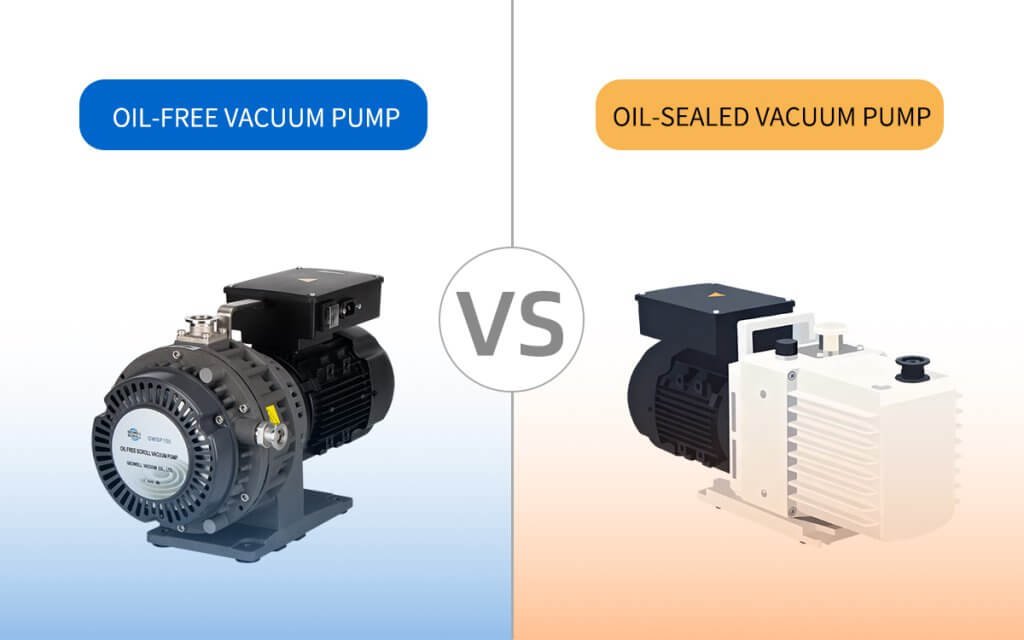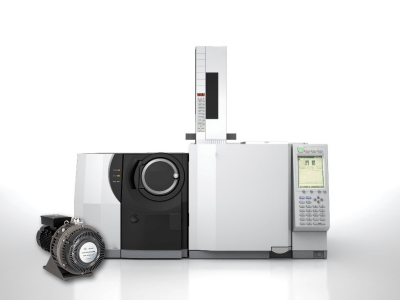

In high-precision analytical applications such as LC-MS, GC-MS, and ICP-MS, the stability of the vacuum system is paramount.The choice of a primary (backing) pump directly impacts operating costs, maintenance cycles, and the purity of analytical results. In recent years, Dry Scroll Vacuum Pumps have been steadily replacing traditional oil-sealed rotary vane pumps due to their clean and efficient characteristics.
Core Selection Criteria for Mass Spectrometry Vacuum Pump
Mass Spectrometry has specific physical and engineering requirements that a primary pump must satisfy to ensure accurate analytical results.
Pumping Capacity and Pressure Stability
For typical MS applications, a pumping speed of 32 m³/h or higher is generally required, with inlet pressures maintained at 1~3 mbar. The pump must reliably handle process gases like Nitrogen, Argon, Helium, and Hydrogen without experiencing pressure drift.
Vacuum Cleanliness (Oil-Free Operation)
Cleanliness is the lifeline of mass spectrometry. Traditional oil pumps carry a risk of oil vapor backstreaming, which can contaminate the ion source or analyzer.
The Scroll Advantage: Advanced scroll pumps utilize an isolated bearing design, moving bearings entirely out of the vacuum space. This eliminates the possibility of hydrocarbons or lubricants entering the vacuum environment from the source, ensuring a completely dry vacuum.
Global Performance Consistency
Laboratory equipment often needs to operate under different voltages worldwide. Premium scroll pumps feature universal voltage/frequency motors, ensuring consistent pumping speed and ultimate pressure across 100-230V and 50/60 Hz environments.
Why Choose Scroll Vacuum Pumps?
Modern scroll pumps strive for “minimalist” mechanical design. For example, some leading models use only three bearings, significantly fewer than the seven found in traditional designs. Fewer moving parts translate to lower failure rates and longer maintenance intervals. Furthermore, users can perform annual maintenance on-site, eliminating the need to ship the pump back for service.
Environmental and Economic Benefits
Zero Waste: No oil changes or hazardous oil disposal are required, aligning with environmental regulations.
Energy Efficiency: Compared to oil pumps of equivalent speed, scroll pumps consume less power.
Implementation Recommendations and ROI
When selecting a primary vacuum pump, beyond technical specifications, long-term Total Cost of Ownership (TCO) must be considered. While the initial investment in a scroll pump may be slightly higher than traditional oil pumps, the operational advantages are significant:
- Reduced Maintenance Costs: Eliminates regular vacuum pump oil changes (saving hundreds to thousands of RMB annually), reducing downtime and labor costs
- Fewer Sample Losses: Clean vacuum environment prevents sample retests and data invalidation due to contamination
- Extended Instrument Lifespan: Reduces contamination to turbo molecular pumps and MS analyzers, extending the life of expensive components
- Compliance Advantages: Meets green laboratory and ISO certification requirements, simplifying environmental management processes
Depending on laboratory usage intensity, the payback period for scroll pumps typically ranges from 1-3 years. For high-throughput analytical labs, the return period may be even shorter. Additionally, many manufacturers offer flexible after-sales service plans, further reducing long-term operational risks.
Conclusion
The transition from traditional oil-sealed pumps to dry scroll pumps is a critical step in enhancing MS efficiency and cleanliness. By providing a stable, contaminant-free vacuum environment, scroll pumps are becoming the ideal foundation for scientific instrumentation.
Frequently Asked Questions
Yes. Most modern scroll pumps are designed for “drop-in” compatibility. They match the footprint, power requirements, and pumping speeds of standard 28 m³/h or 40 m³/h oil pumps, making them an ideal upgrade for existing LC-MS or ICP-MS setups.
One of the biggest advantages of scroll technology is user-maintainability. While oil-sealed pumps require frequent oil checks and changes, a scroll pump usually only requires an annual service that can be performed on-site by the user, avoiding costly downtime and shipping.
Scroll pumps are engineered with high compression ratios to prevent gas back-migration. In applications using Helium as a carrier gas, the scroll mechanism resists “stalling” or signal drift caused by gas retention, ensuring stable pressure and consistent analytical signals.
Generally, no. Due to the continuous nature of the scroll compression cycle and fewer reciprocating parts, they tend to operate with lower vibration and noise levels than rotary vane pumps, improving the laboratory environment.